Tuesday, 29 May 2007

Desert towns

Further and further north along the coast - in Chile´s Norte Grande we are well and truly into the Atacama desert... No more grass, no more plants, the desert is so dry that nothing, and I mean NOTHING, lives here. Not even cactus.


Welcome to the Atacama desert.


Iquique sits on the coast at the base of a massive dune.


Despite the appearance of empty land, there is something of value in the area - enormous mineral and metal deposits that Chile has been using to fuel their economic boom. Copper mines, borax mines, and the abandoned nitrate mines dot the landscape. The nitrate industry was huge at the beginning of the century, but has since collapsed, leaving abandoned mines and ghost towns such as Humberstone in the desert inland from the coast. The capital of the region, Iquique, did very well out of the trade while it lasted, but is a little more down at heel now that the good times have finished.


The road past the dune.

The deserted Santa Laura nitrate factory - complete with all the machinery inside.

The view from within.

Rust and sand.

The town square and watchtower at Humberstone - abandoned in 1960.

The school room ready for the next class.


The theatre is now silent (and a little creepy).

Sunday, 27 May 2007

Tell me why....

Sometimes you end up in a place that makes you wonder why you stopped. Especially when the locals ask in bewildered tones why you are there - and you just can´t come up with a good answer.

Copiapo - this one´s for you. No photos because there was nothing to see.

Saturday, 26 May 2007

Elqui valley

Just north of Santiago in El Norte Chico is the Elqui Valley - home to Chile´s pisco distilleries. The runoff from snowmelt in the Andes is sufficient to support agriculture year-round in the valley, producing a green valley floor against bare mountains. The valley boasts more than 300 days of sunshine a year - good for growing grapes for pisco, and good for tourists who are moving north from the chilly south! Since the valley is located at the start of the Atacama desert (driest desert in the world don´t you know), the climate is also perfect for astronomical observatories. In deference to my brief dabble in astrophysics, we spent a night star-spotting like experts.

The Elqui valley hemmed in by the Andes.

The Atacama desert begins with a cactus or two.

On the coast in this region of Chile is the Humboldt Penguin National Reserve - here the cold Humboldt current from Antartica meets a warm current from offshore creating the perfect habitat for Humboldt penguins and many other marine species. The meeting of warm and cold also creates a permanent cover of clouds - a stark contrast to our days in the Elqui valley. We saw dolphins, humboldt penguins, seals, birds, otters, and a stray female elephant seal that had swum up from Antartica on the Humboldt marine highway. Far from seeming distressed by tourist presence, the dolphins instead swam with our little boat, taking it in turns to surf just in front of the bow - from which position they would watch the tourists watching back. Cruising along eye to eye with a dolphin was a pretty amazing experience...

Seal and friends.

The dolphins had hours of fun playing around our boat.

One of the islands we visited in the reserve - complete with atmospheric clouds.

Monday, 21 May 2007

Mendoza - land of plenty

Even though we had never planned to visit Argentina (saving it up for another trip!) we couldn't resist a short visit across the Andes from Santiago, Chile to Mendoza, Argentina. Home to 80% of Argentina's wine production, Mendoza is a foodies heaven - so long as said foodie is happy to eat dinner at midnight!

The road from Santiago to Mendoza switches back and forth as it climbs to a border crossing high in the Andes

Suffice to say that this little sidetrip from our trip was basically about food, wine, more food, more wine, and then sleep. It coincided with a Chilean long weekend, so there were plenty of people over from Santiago there to do the same thing. And the venue of choice on the Saturday night was Las Tinajas. More than all-you-can-eat, this place was a temple to all things food. Separate chefs could suuply you with freshly cooked fish, stirfry, pizza, pasta, and of course, meat. All kinds of meat. As many times as you cared to return, there would be food to fill your plate. The dessert buffet alone made Carl shed a tear. And possibly my favourite section - a chef just for crepes.


The grill at Las Tinajas - larger than an inner city apartment...


The chefs hard at work.


The crepe chef.


Argentinian Malbec wine... ageing while it awaits our return.

Thursday, 17 May 2007

Adventure land

Next stop - Pucon, in the Lake District. Like all good adventure tourist towns there was a nearby snowcapped volcano to climb, horse riding, hiking trips in the surrounding countryside, and a series of thermal springs in which to relax afterwards. When all the climbing, hiking, riding, and soaking was done, the town offered the usual abundance of restaurants to cater to the tourist market.

We never did climb the volcano in the end (bad weather blocked our 3 attempts), but we did go white water rafting. In winter. Despite a small flurry of hail at the outset, it was really good fun. Especially the bit where we got to watch the other boatload end up in the water.


This is our group in our very funky streetwear. There are wetsuits under it all.


Our team in action.

Monday, 14 May 2007

Messing about in boats

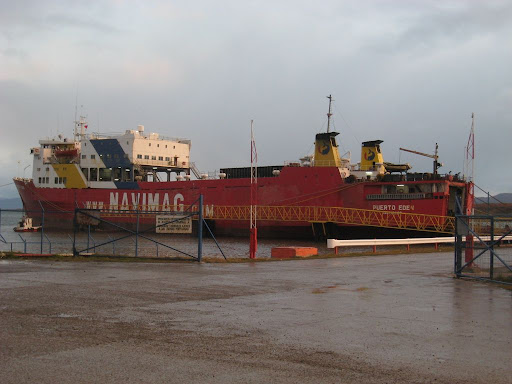
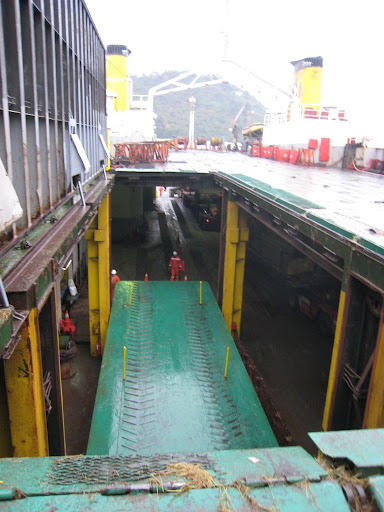
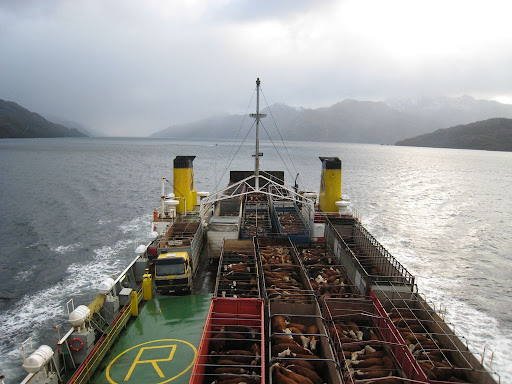
One of the few things we definitely knew we wanted to do even before leaving home was the boat cruise through the islands of Patagonia in the far south. So, one evening, we climbed aboard the Navimag ferry in Puerto Natales for a four day cruise up to Puerto Montt. Now, to paraphrase Zoolander, this was definitely a cargo/passenger vessel, and not the other way around. To be fair, this had been stressed in advance and it was kind of fun to be loaded onto this boat as an after thought and in one giant pack via the cargo lift. Still, it did mean that rather than gym, spa and gamesroom, the boat featured cow pens, cow pens and more cow pens. Turns out in this direction it's primarily a 'live cargo' vessel.

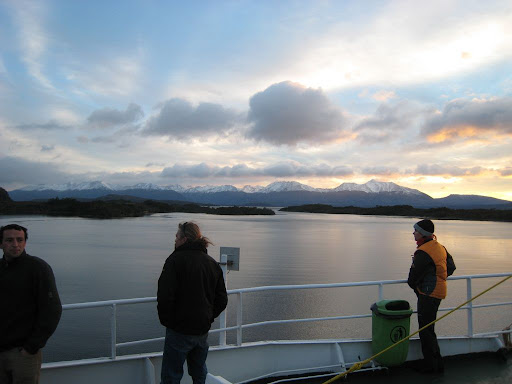
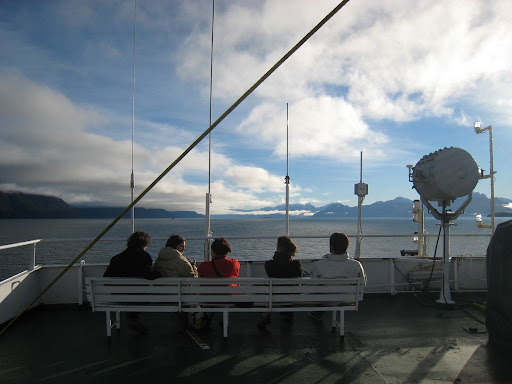
Nevertheless, this was an(other) amazing few days. The scenery was of course spectacular, and included passage through a channel so narrow the boat will only attempt it in daylight. Seals, dolphins and copious birdlife were all on show, as was some spectacularly stormy weather during the periods the ship was on the open ocean. Finally, we met some great people and had a few entertaining pisco-fueled nights, as well as playing endless rounds of Shit Head. Aah what a game!


No-one claimed she'd be a pretty boat.


Crew prepares to load passengers. Not quite the QE2 :).


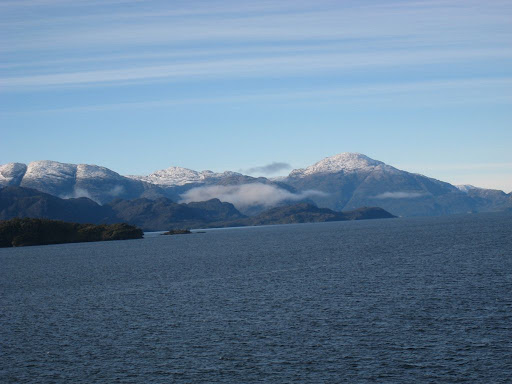
But the scenery more than made up for it.


Clear sailing...

...and amazing sunsets.


Not to mention stimulating company!

Thursday, 10 May 2007

Torres del Paine

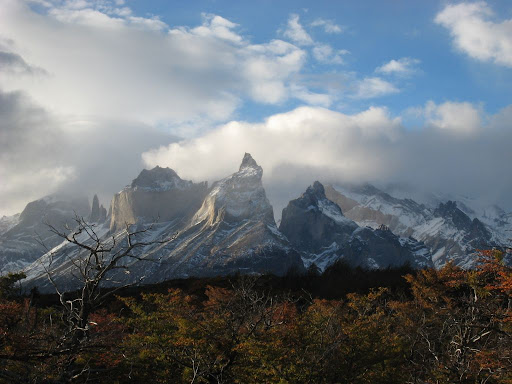
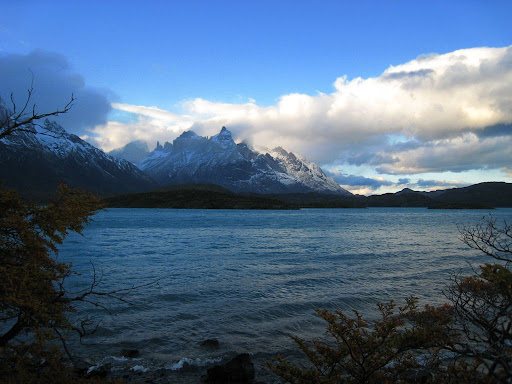
Torres del Paine. Some spectacular stuff.
From big city Santiago to small smaller smallest little frontier towns in Patagonia. Heading to the far south of Chile, we flew to Puerto Montt (small), flew on to Punta Arenas (smaller), then bus to Puerto Natales (smallest). Cute little tourist town that exists predominantly to serve the Torres del Paine national park, which is where we headed next, for a few days hiking (yes hiking, yes us).

Supposedly it's off-season almost everywhere we´ll be in Chile, which is crazy in one sense, as pretty much everything is still accessible and definitely spectacular in autumn and winter. In another way 'off-season' is a great idea as, while we're seeing hardly any other tourists, apparently in summer it's like Pitt St mall out there.


Anyways, for us off-season did mean that all but one of the refugios inside the park were shut, meaning that, if we didn't have the gear necessary to camp out in the snow, there was only hike we could do. This saved us the dilemma of having to decide whether we were up to the classic 'W' circuit, a spectacular but somewhat tough 5 day track :). But I'm sure we would have done it if we could :). Needless to say, scenery was amazing, weather and wildlife were amazing, and good times were had by all.
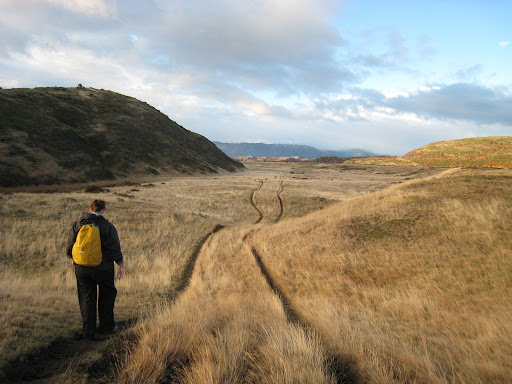
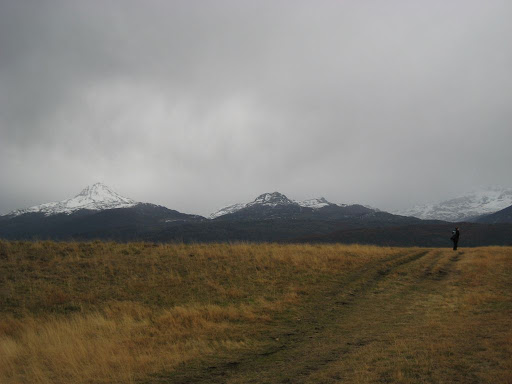
Plains...

Mountains...

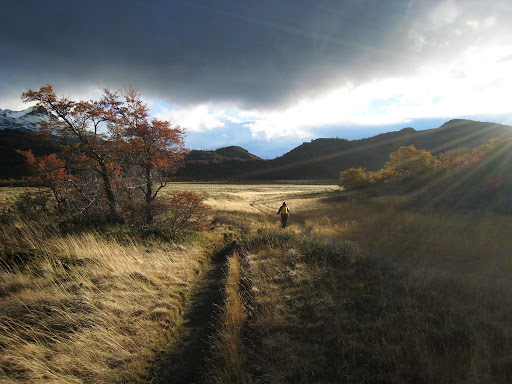
Almost storms...

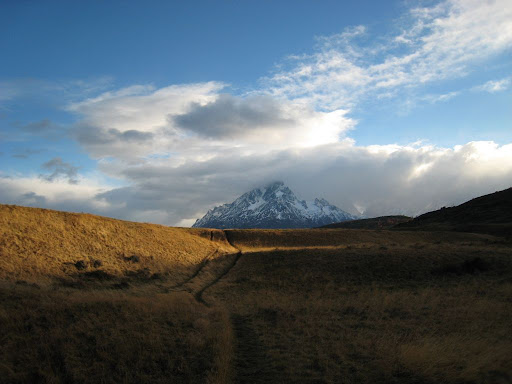
The big papa mountain.

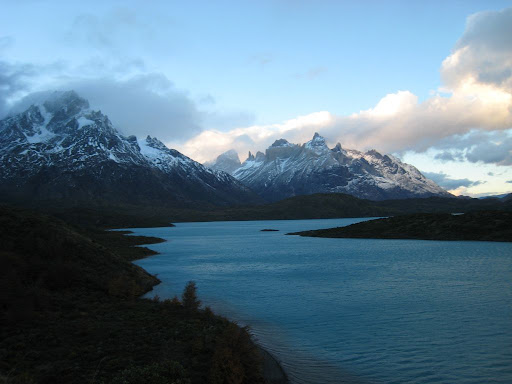
And lots of hills and water, somewhere in which lies our refugio.

Saturday, 5 May 2007

Chile weather

Santiago. It'd be a spectacular view of the Andes behind the city, if the smog ever lifted.

Twas a bit of a shock to return to non-English speaking travel but Chile is great fun. Santiago is an easy city to readjust in - very Western (perhaps too much so - Santiago has more fast food outlets per capita than NYC. Chileans appear to love their takeaway).

In fact if it wasn´t for the smog, Santiago would be spectacular. Ocean on one side and ski fields on the other. However the downside of being squeezed between ocean and mountains is an almost permanent layer of smog that doesn´t move.

After a few days adjusting from travel in the States with friends, to the far less glamorous life of backpacking through non-English speaking countries, we relocated to Valparaiso, a pretty little seaside town. Valparaiso is famous for its beaches and its inclinators. Built on a series of steep hills, the city features these crazy little railways (ascensors) which connect uptown and downtown. Many of these are over a century old and have the look and feel to match (think of a garden shed on a rope sliding up and down a guide rail on the side of a near cliff). Makes for spectacular views from uptown but is a bit of an opportunity for extortion for the operators (recently the ascensor serving our hostel hiked its fees by 500%, hitting a pretty outrageous figure for what's essentially a necessary public utility).

Valparaiso, and one of the older ascensors.


That wooden shack look isn´t just for show.


Anyways, fun and games by the coast. We made the most of it, knowing next stop would be the far less friendly climes of Patagonia.